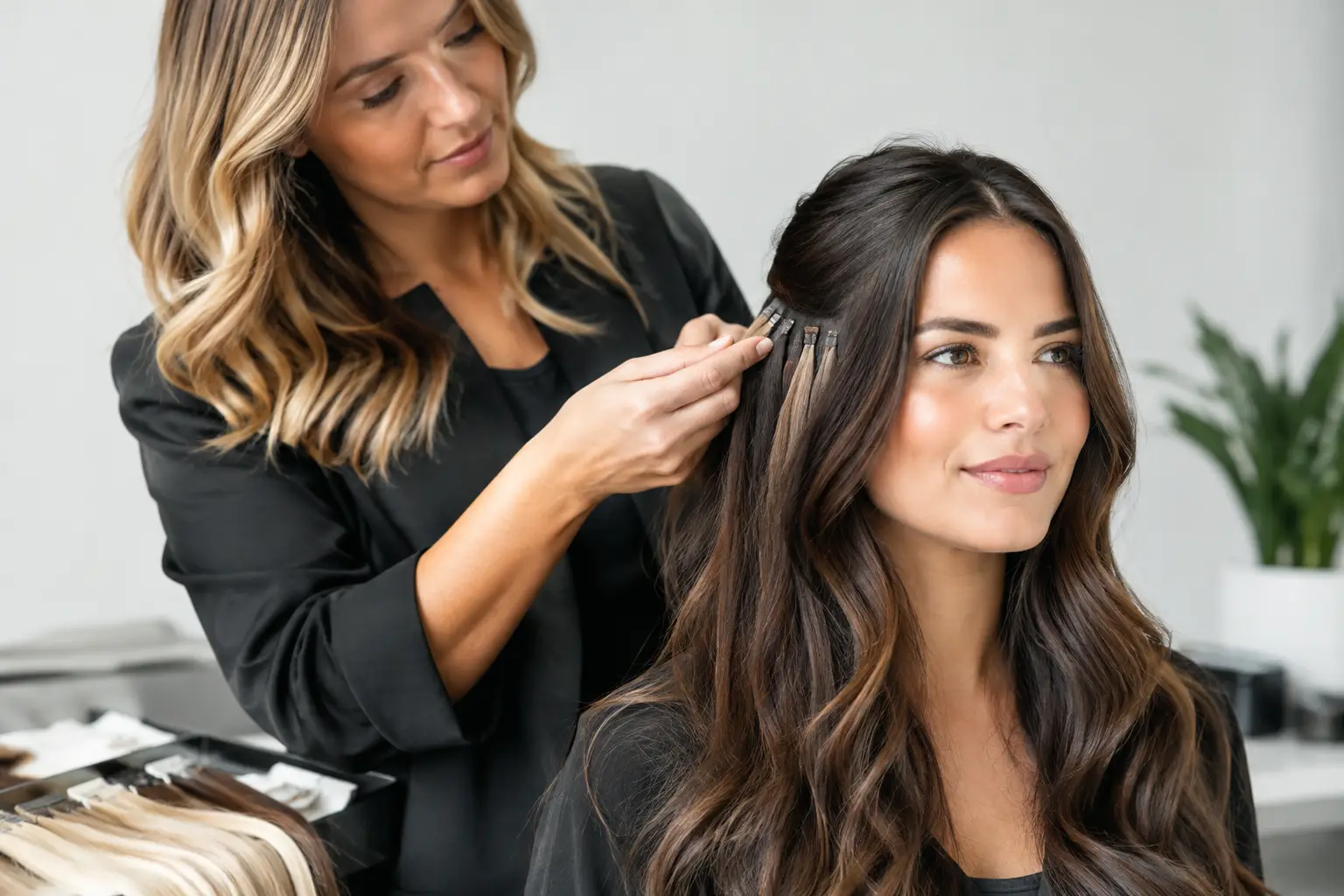
What Extension Certification Means for Your Hair
A beautiful extension transformation should feel as good as it looks. If you have fine hair, struggle to grow your length, or have worn extensions that felt too tight, too visible, or simply not like you, the person installing them matters just as much as the hair itself. Extension certification is one of the clearest signs that your stylist has invested in the training behind a comfortable, natural-looking result.
But certification is not a magic label that makes every appointment identical. The best extension experience comes from trained technique, quality hair, thoughtful placement, honest consultation, and consistent maintenance. Here is what certification can tell you before you commit to your next transformation.
What Is Extension Certification?
Extension certification is specialized education that teaches a stylist how to install, remove, maintain, and troubleshoot a specific extension method. Depending on the program, training may cover Invisible Bead Extensions, hand-tied wefts, natural beaded rows, K-Tips, I-Tips, tape-ins, V-light enhancements, or several methods.
A licensed cosmetologist is trained in hair cutting, color, sanitation, and foundational hair services. Extensions require another level of technical detail. A certified extension stylist learns how to assess the hair and scalp, create balanced sections, place attachment points strategically, match hair color, and guide clients through at-home care.
That additional education matters because extensions are not one-size-fits-all. A method that gives one client dream hair may feel too heavy or require too much upkeep for another. Certification gives a stylist a framework for making an informed recommendation instead of applying the same install to everyone who sits in the chair.
Why Extension Certification Matters for Clients
You do not need to memorize every installation technique before booking a consultation. You deserve to know that the stylist understands the responsibility that comes with adding hair to your natural hair.
The right installation protects your comfort and your confidence. It should move naturally when you put your hair up, stand up to a breezy LA day without obvious attachment points, and avoid unnecessary tension on areas that are already fragile. For clients with fine or thin hair, careful weight distribution and placement are especially important.
A trained stylist also knows when to say no or suggest a different plan. If your hair is too compromised, your scalp is irritated, or your goal would require more density than your natural hair can comfortably support, an honest recommendation is part of premium service. Sometimes that means beginning with a lighter enhancement, a shorter length, a color plan, or a hair-health routine before moving into a fuller transformation.
Certification also supports better removal and maintenance. Extensions should never become a set-it-and-forget-it service. As your natural hair grows, attachment points move away from the scalp and need to be repositioned. Leaving them in too long can lead to tangling, discomfort, and stress on the hair. For beaded-row methods such as IBE, maintenance is commonly scheduled every seven to ten weeks, based on your growth pattern and home care.
What a Certified Extension Stylist Should Consider
A certificate on the wall is a starting point. During your consultation, listen for a stylist who asks specific questions and explains their recommendations in plain language. Great extension work is customized well before the installation appointment begins.
Your natural hair, scalp, and lifestyle
Your stylist should look at your density, texture, length, previous color history, and the condition of your ends. They should also ask how you wear your hair. Do you work out often? Wear a high ponytail? Swim regularly? Need a low-maintenance routine? These details affect the method, length, volume, and placement that make sense for you.
Someone with delicate hair around the hairline may need less density in that area. Someone who wears their hair up every day may need a placement plan that keeps attachment points discreet. A stylist who understands extensions will explain these choices rather than promising unlimited length and fullness without seeing your hair.
The right method, not the trendiest method
No extension method is universally best. Invisible Bead Extensions are loved for a clean, concealed row with minimal points of contact and no glue, tape, or heat used in the installation. For the right candidate, they can create gorgeous length and density while remaining comfortable and flexible.
Other clients may benefit from K-Tips, I-Tips, tape-ins, V-light enhancements, or another approach. Individual bonds can be useful when a client needs more customized distribution. Tape can be fast to apply but may not be ideal for every lifestyle or hair type. Hand-tied and weft methods offer beautiful fullness, yet the row design and weight must be precise.
A certified stylist should be able to discuss the trade-offs without making you feel overwhelmed. The goal is not to sell the most hair. It is to create hair that looks natural, feels comfortable, and fits your real life.
Color and blending
The secret to an undetectable extension result is rarely one flat color. Natural hair has dimension, warmth, depth, and lighter pieces that shift in different lighting. A skilled extension specialist considers your root color, mid-lengths, ends, highlights, and face-framing pieces when selecting extension hair.
Custom color may involve blending multiple shades of high-quality hand-tied hair and adjusting your natural hair color to create a polished transition. The haircut is equally essential. Even premium hair can look obvious if it is not shaped and blended into your natural length.
Questions Worth Asking Before You Book
A consultation should leave you feeling informed, not pressured. You can ask which methods your stylist is certified in, how long they have been installing extensions, and which option they recommend for your hair goals. Ask what the maintenance schedule looks like, what happens at a move-up appointment, and how removal is handled.
It is also smart to ask what hair quality is being used and whether the color is customized for you. Extension pricing can vary because it reflects more than the installation day. The amount and quality of hair, color work, method, appointment time, maintenance plan, and experience behind the service all play a role.
Most importantly, ask what you can realistically expect. If you want dramatic waist-length hair but your natural hair is very fine and short, your stylist should discuss what can be achieved safely. A beautiful result is not about chasing the biggest transformation possible. It is about choosing a transformation that still feels like your best hair.
Certification Is Only Part of the Standard
Extension education does not end after one class. Strong stylists continue refining their work through advanced classes, manufacturer education, hands-on practice, and experience across different hair types. They stay current on methods, learn better approaches to comfort and concealment, and build the consultation skills that prevent mismatched expectations.
For stylists, extension certification can also be a meaningful way to elevate client care. Technical application matters, but so do clear maintenance instructions, confident color matching, professional photography, and knowing how to build a loyal extension clientele. Education such as the Gleam and Glow extension class can support both the artistry and the business side of becoming a trusted specialist.
For clients, experience still matters alongside credentials. Look at a stylist's finished work, especially photos and videos showing movement, part lines, updos, and natural blending. Pay attention to whether their results look consistent across different hair colors and densities. The goal is not a perfect social-media angle. It is hair that looks beautiful from every angle you live in.
Your Best Hair Starts With the Right Conversation
Extensions should give you more freedom, not another thing to worry about. You should be able to run your fingers through your hair, style it with confidence, and enjoy fuller, longer hair without constantly checking for visible rows or painful attachment points.
At Extensions by Maka, the consultation is where that confidence begins. A personalized plan gives you space to discuss your hair history, desired look, daily routine, budget, and maintenance commitment before any hair is ordered or installed. That is how a luxury transformation becomes personal instead of predictable.
If you are considering extensions, choose a stylist who treats your natural hair as the priority. The right training, the right method, and a thoughtful plan can make your next look feel effortless long after you leave the salon.


Comments